

Flood insurance is specific type of insurance that offers protection of damage due to flooding. Although it is often overlooked it is crucial element in complete asset protection particularly when it comes to areas susceptible to rain heavy as well as typhoons as well as storm surges.
Additionally it is near lakes. Contrary to popular homeowner and renters insurance policies that typically are not able to cover flood damages flood insurance provides protection against


catastrophic financial impacts of rising waters.
The importance of insurance for flooding cant be overstated given present climate of shifting weather. As severe weather conditions are becoming more frequent and as well as severe danger of flooding can be increased in regions that are traditionally considered to be protected.
Damage from flooding is often devastating and can cause huge damages to properties destruction of private properties and financial burden when those do not own insurance for protection.
This complete guidebook is this thorough guide we look into specifics of flood insurance. It will explain how it works who is qualified for it and ways you can obtain insurance.
Well delve into both authorities sponsored and private flood coverage alternatives discuss prices and mitigation techniques and offer expert insights to help you make informed choices approximately protective your own home from flood dangers.
Understanding Flood Risks
Before we look at particulars of flood protection it is important to understand attributes of flood risk and their implications as huge risk to homeowners.
Types of Floods
Floods can take on variety of kinds each with its particular set of challenges:
- Flash Floods: caused by torrential rain or swift snowmelt these floods increase in intensity and could become dangerous.
- Flumes in rivers typically occur on banks of rivers become flooded due to massive rainfall or melt of snow downstream.
- These floods can be caused by storm surges caused by typhoons which usually are linked to severe storms such as hurricanes or.
- Urban Floods are common in areas that have high density where impervious surfaces like asphalt or concrete hinder water from getting to earth.
- Failures of Levees and Dams can cause massive flooding unexpectedly in areas which are believed to be safe.
Flood prone Areas
Though flooding can be observed all over world certain regions are particularly susceptible to flooding:
- The areas along coast and zones around large bodies of water
- Floodplains and areas with low mendacity
- Urban areas that have poor drainage systems
- areas that are susceptible to hurricanes or severe storms
- Disruptions downstream of dams and levees
Its important to recognize that properties outside of zone of risk for flooding could be at risk of
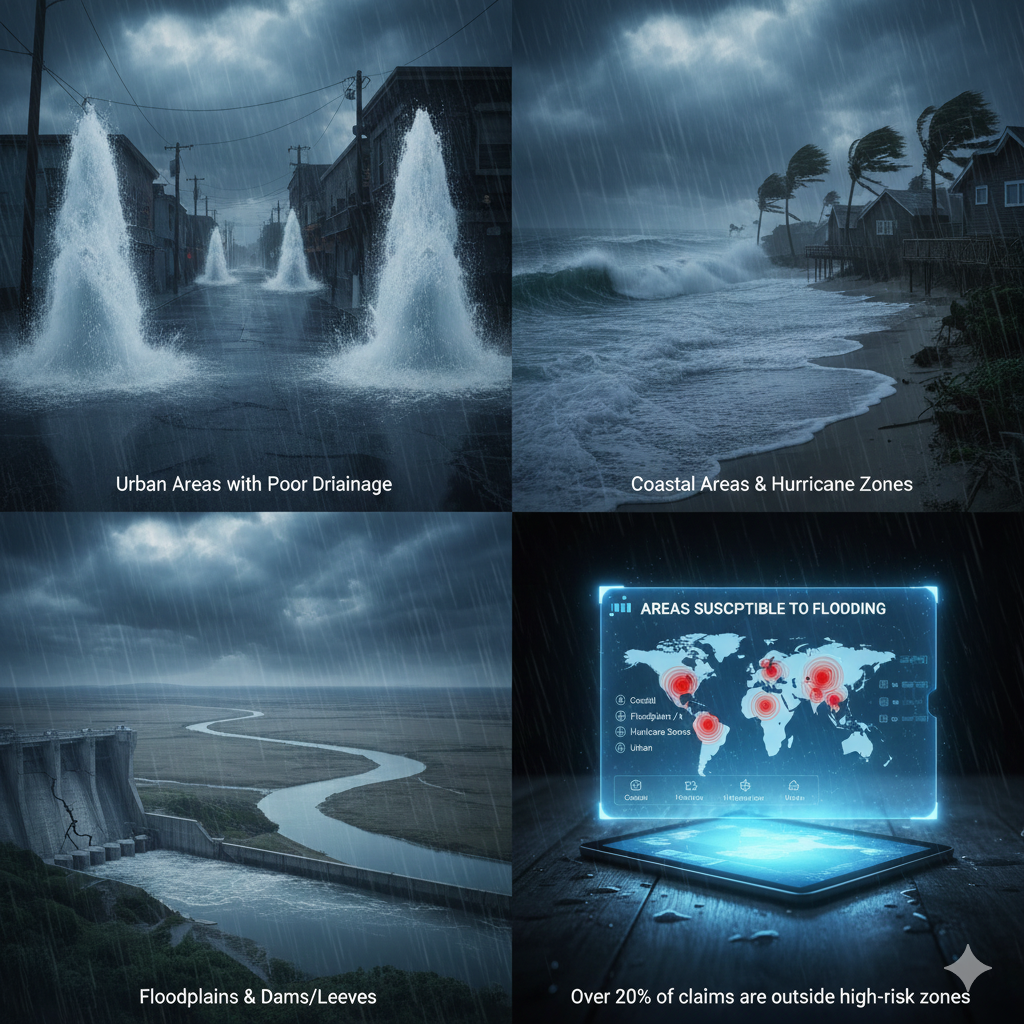
flood. More than 20 percent of flood insurance claims stem from houses located in low to moderate risk areas.
Climate Change and Increasing Flood Risks
The trade in climate has increased risks of flooding across globe. rising sea level extreme rain and shifts in climate pattern result in an increase in frequency and intensity. Therefore historical flood data are not reliable indicator of flood risk for foreseeable future which is making need for flood security more important than ever before.
How Flood Insurance Works
Flood insurance operates in different methods that are different from standard coverage regulations. Understanding how it works is essential for property owners that are thinking about this kind of insurance.
Coverage Provided
Flood insurance typically covers fundamental classes such as:
- Building Property Coverage:
- The shape of structure
- Foundation
- System for electrical and plumbing wiring
- Central Air Conditioning Equipment
- Furnaces as well as water heaters
- Refrigerators cooking stoves and cooktops along with in built household appliances
- Carpets that can be permanently hung
- Personal Property Coverage:
- Clothing
- Furniture
- Electronics
- Portable appliances
- Food inside them
- Many treasured items (as to exact limit)
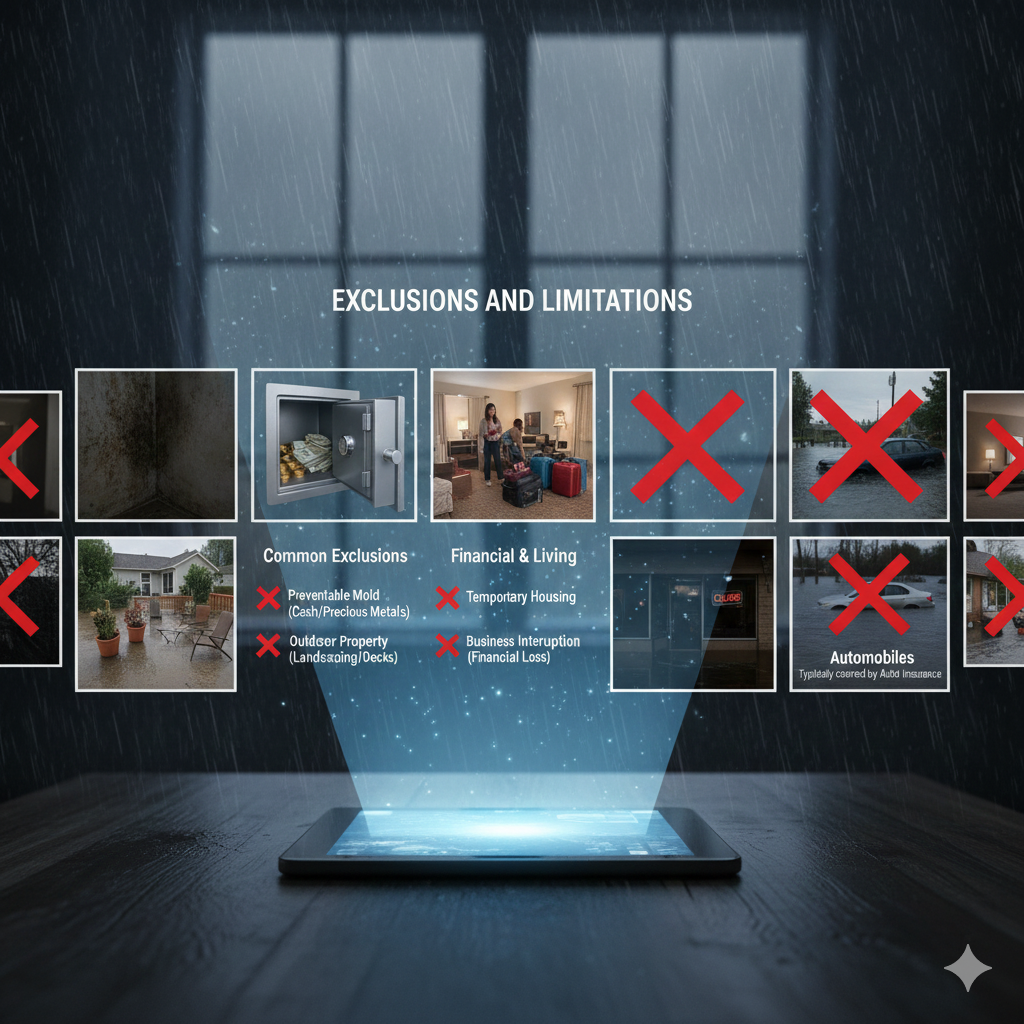
Exclusions and Limitations
Insurance for floods provides ample protection it is essential to keep track of most frequent exclusions
- The damage to your property can be caused by mildew or mold that can be prevented
- Precious metals and coins along with treasured paper
- The assets and property that are not part of building (e.G. landscaping or decks)
- The cost of temporary housing
- The financial losses of company result due to interruptions in business
- Automobiles (these typically are covered by regulations for automobile insurance)
Waiting Periods
Most flood insurance policies provide time frame prior to coverage taking into effect.
- National Flood Insurance Program (NFIP) Guidelines provide 30 day interval for waiting time in most cases.
- Private waiting time to be covered by flood insurance can differ but they usually are shorter (round 10 to 15 days)
The waiting times have been created in order to discourage people from purchasing insurance in event of flood is imminent. It is possible that flood insurance coverage is required to protect cost of closing mortgage.
Being aware of these factors in flooding insurance can assist asset owners in making educated decisions on their expectations regarding insurance and needs.
National Flood Insurance Program (NFIP)
The National Flood Insurance Program (NFIP) is key participant in world of flood insurance within United States. Understanding this program is vital to those who are thinking about flooding insurance.
History and Purpose
The NFIP was established by way of legislation referred to by National Flood Insurance Act of 1968. Its primary goals are:
- Insurance for floods is required for homeowners of possessions within communities in which they participate.
- Engage communities in implementing floodplain management rules
- Federal costs are reduced to aid in fight against flooding and disasters.
The motivation behind plan was to address fact that insurance companies were not inclined to sell flood insurance due to risk of flooding that comes with risk.
Eligibility Requirements
For purpose of being eligible to be NFIP following criteria must be met:
- Your business must take part in NFIP
- Your business must be in Special Flood Hazard Zone (SFHA) as well as group which youre part of must be member of NFIP with non committal basis.
It is crucial to keep in mind that at any point you are no longer in high risk region. It is possible that you still qualify and may think about recalling your insurance.
Coverage Limits

NFIP guidelines contain specific insurance restrictions:
- Residential Buildings:
- Insurance for construction up to $250000
- Contents coverage: Up to $1100000
- Commercial Buildings:
- Construction coverage as high as $500000.
- Coverage of Contents: Up to $500000
Limits are set every year when building is completed and for protection for items. If you are interested in covering over these limits its feasible to look into an insurance policy for flood insurance that is private.
Private Flood Insurance
Although it was case that NFIP has been most well known insurer for long period non public flood insurance is getting popular and accessible.
Comparison to NFIP
Private flood insurance can provide several benefits over NFIP policies:
- Limits to coverage
- The shorter wait duration.
- Insurance options that are flexible
- The possibility of lower prices particularly those areas that have lower risk
However guidelines that arent accessible may contain more stringent guidelines on underwriting. They might not be available for all high risk areas.
Advantages and Disadvantages
The benefits of personal flood insurance: insurance:
- There is possibility of cutting expenses
- Coverage limits which are greater
- More comprehensive coverage (e.G. including dwelling prices)
- Shorter ready durations
Disadvantages:
- It could be less secure in long run (groups might decide to stop providing insurance)
- There is chance that this is not case due to help of loan creditors in general.
- The luxury could be higher in locations with high likelihood of catastrophe
Market Trends
The demand for non public flood insurance is increasing through:

- New advances in modeling flood risk
- Flood risk is increasing because of climate change
- Regulations to encourage individual market participation
In current market people who own assets can get greater choices and better prices for flood insurance.
Determining Your Flood Insurance Needs
The decision to obtain flood insurance is complicated process that entails several aspects:
Assessing Your Propertys Flood Risk
- Check out FEMA Flood maps They show danger of flooding within your region.
- Pay attention to terrain of your area Even if you live in an area that is at significant risk topography surrounding your home could impact risk of flooding.
- Check your homes elevation. Homes which have lower elevations may be more vulnerable.
- Find flood related records from past in region which you are resident of.
Calculating Potential Losses
Consider:
- The value of your home is as high as possessions you own
- Costs of restoring or replacing
- The costs associated with moving temporarily in case property you live in becomes difficult to access
Considering Your Financial Situation
Look at:
- You must have capacity to absorb flood risks
- A sense of peace that comes from flooding protection could be blessing
- It is possible that you have an unsecured credit that needs flood insurance
Take note that even couple inches of water may create massive damage. Its usually safer to have your property covered rather than have to use it rather than need it but not have it.
Purchasing Flood Insurance
If youve opted to purchase flood insurance there is variety of choices to purchase insurance coverage.
Through NFIP

For purchasing NFIP insurance:
- Contact your current insurance broker or company you work for.
- Utilize NFIP place of business which covers you on FEMA website
- The NFIP can be reached immediately at 1 800 427 4661
NFIP rules are set up by private insurance firms however theyre backed through Federal government.
From Private Insurers
In order to purchase insurance for private flooding insurance
- Locate insurance companies offering personal flood insurance in area you live in.
- Review cost of various of service companies
- Be sure insurance youve selected is in line to needs of lender if you are required to have it.
Collaborate with Insurance Agents
The marketing of insurance is one of most beneficial when purchasing flood insurance
- They can assist you in understanding risk of flooding.
- They could provide an details of insurance options and assist with choosing most appropriate limits
- They could assist with application process
- They can offer advice on how to cut costs
If you opt to choose NFIP or another non public type insurances consulting with knowledgeable agent can ensure that you get security you want.
Cost of Flood Insurance
The price of insurance coverage for floods can vary according to different aspects. Understanding these aspects will enable you to establish cost for your coverage and find strategies to reduce your expenses.
Factors Affecting Premiums
- Areas that are considered to be at risk of flooding: Homes situated in risky regions typically has lower expenses
- It is age of house and building it is built on: older properties along with those havent been constructed according to latest standards in flood protection could be more costly to repair.
- The elevation of floor below in relation Base Flood Elevation (BFE)
- Limits on amount of insurance coverage Higher amounts of insurance is likely to result in increased costs.
- Deductible: Choosing higher than your deductible can lower overall expense
- Insurance of certain type (building or contents)

Ways to Reduce Costs
- Charges for utility upgrades HVAC structures or electric panels for water heaters over BFE can reduce cost.
- Make flood proofed openings. They allow floodwaters to flow through areas that are protected which minimizes damage
- Clean out basements and remove slow areas. This will increase your propertys score for flooding.
- Keep flood proofed openings clean: Keep they clear of clutter and working in correct manner
- It is recommended to obtain an elevation certificate. This document could be useful in making certain that you arent paying excessively for cost of covering
Payment Options
A lot of insurance companies offer range of costs options to their customers:
- Yearly cost of: Occasionally it is accompanied by slight discounts
- A monthly payment can be made with one tiny cost but its likely to lead to charges which cannot be eliminated.
- Escrow Flood insurance will regularly ensure that escrow account is protected that you use to fund credit
Certain insurers may provide option of semi annual or quarterly pricing.
Filing Flood Insurance Claim
If you happen to be in situation where youre required to make claim on flood insurance knowing best way to file it is great way to you enjoy moment even if it is bit stressful.
Steps to File Claim
- Contact your agent for insurance or agency as soon as you can.
- Note damage.
- Be sure to capture photographs and film prior to beginning cleaning
- Make detailed list of items that have been damaged
- Clean up process from beginning to end:
- Remove broken gadgets which have been submerged to protect you from growing mold
- Print copies of damaged items (e.G. wallpaper carpet) for adjuster to see.
- Speak to an adjuster for insurance:
- They must be able to demonstrate all places susceptible to injury.
- Tell us exact inventory
- Submit proof of loss form within 60 days of date of event.
Required Documentation

- The proof of Loss Form
- An inventory of everything that are broken
- Films and images of violence
- Receipts of broken items (if theyre still readily available)
- Estimates of maintenance cost
Common Challenges and How to Overcome Them
- There is dispute over amount of damage you are looking to obtain an accurate estimation its desirable
- Delays in processing for claims regular communication with your insurance provider
- Insecurity about your insurance coverage Check your policy out thoroughly and talk to your agent to clarify questions.
- If you dont have enough insurance you may want to look into purchasing more individual insurance in order to protect security of your future.
Take note that declaring can be difficult. Make sure you inquire about or seek professional help should you require assistance.
Flood Mitigation Strategies
Although flood insurance may offer financial protection implementing flood control methods can reduce chance of damage and can decrease your insurance expenses.
Structural Improvements
- The height you can increase of your house by elevating your home above Base Flood Elevation can substantially reduce risk of flooding
- Put in backflow valves. This stops sewage from leaching into your home in event of flood.
- Make use of water resistant sealants as well as coatings. They can prevent water from getting in to foundations partitions and even walls.
- Make electrical structures higher by moving sockets and switches along with circuit breakers as well as electrical wire at least one feet higher than floods extent
Landscaping Techniques
- The garden can be planted in event of rain garden can be utilized to soak up water.
- Use permeable materials for driveways and paths make sure that water is soaked into flooring
- Check to ensure you have right drainage. Be sure that your gutters are in good condition and divert water away from your house.
- The indigenous plants of plant: They generally are better suited to local climate and can help in process of water absorption.
Emergency Preparedness

- Make flood proof plan that includes evacuation routes and an exchange of messages between your loved ones
- Create an emergency plan that includes essentials like water food items that arent perishable and first aid kits essential documents
- Install sump pumps that have batteries backup. They can help in removal of all water in your crawlspace
- Be sure to select flood proof products. If you are remodeling look for products which can withstand force of flooding directly in contact for minimum for 72 hours.
The use of these strategies is not just way to safeguard your home but can also help lower your insurance for flooding.